
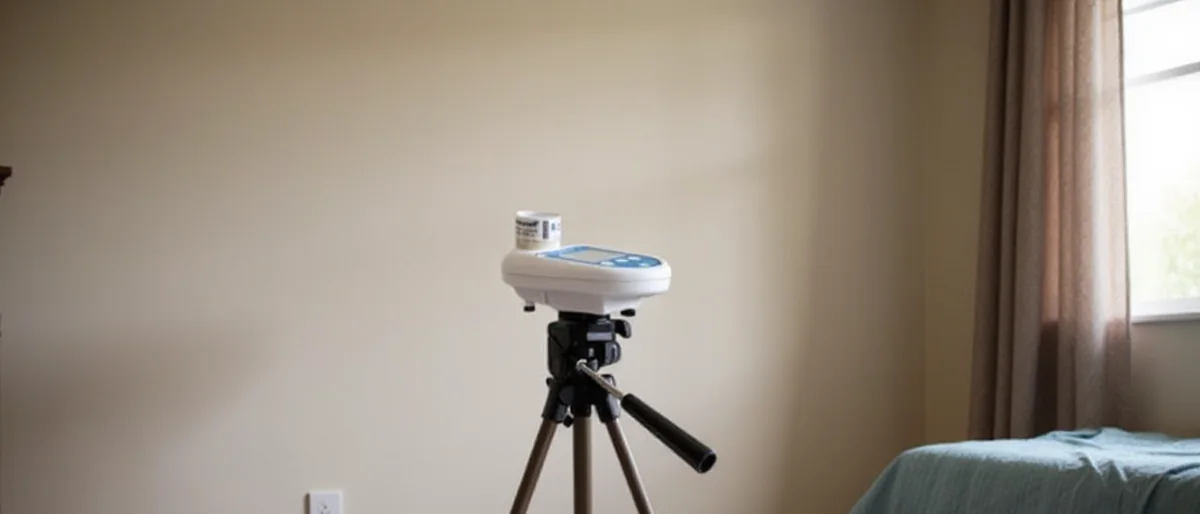
Indoor air quality

When the building itself is the symptom

Sometimes there is no stain and no leak - just a smell that will not leave, or a complaint that stops at the front door. An indoor air quality assessment looks at the whole building: how it is heated, ventilated, humidified and filtered.

Start with the complaint, not with a test kit

An assessment starts with questions: when it began, what changed around then, where in the building it is and is not, and whether it is worse at certain times of day. Those answers narrow the field and decide which measurements are worth taking.

What an air quality assessment actually looks for

FORMALDEHYDE - a gas released by pressed-wood products, cabinetry, some flooring and furnishings; a common complaint in new or renovated buildings.

VOCs - volatile organic compounds from paints, adhesives, solvents, cleaners and new furnishings. Total VOC is a screening measurement that helps locate a source.

SICK BUILDING SYNDROME - occupant complaints that improve away from the building with no single obvious cause. It is often related to ventilation, which is why carbon dioxide and carbon monoxide are measured alongside VOCs.

Temperature and relative humidity, measured first

Temperature and relative humidity are recorded in the affected spaces and outdoors, and compared with published guidance: ASHRAE Standard 55 for thermal comfort, and EPA guidance to keep indoor relative humidity below 60%, ideally between 30% and 50%.

Air that stays above about 60% relative humidity can support growth on dust, furnishings and finishes, which is why a humidity problem and a mold problem are often the same problem.

The five things an HVAC system is supposed to do

A mechanical system has five jobs: control temperature, control humidity, ventilate occupied areas, pressurize the building, and filter the air. Air quality complaints often trace back to one of them - an oversized unit that never runs long enough to dehumidify, outside air that was dampered shut, a room with supply but no return, a building running negative and drawing air from a crawlspace or garage, or a filter that restricts airflow.

How the sampling strategy gets chosen

Sampling tests a theory formed during the walk-through. A fungal theory calls for air samples with an outdoor control and surface samples where appropriate; a wet-materials theory calls for moisture mapping; a bacterial theory calls for bacteriological sampling. Comparison areas and an outdoor control make results readable. Some findings - a return pulling attic air - need no laboratory at all.

What a sick building investigation looks like

When several occupants report symptoms, the assessment covers the building envelope and mechanical systems together, working through comfort conditions, ventilation and pressure, then moisture, then targeted sampling.

We assess buildings, not people. Whether an occupant's symptoms are related to the building is a medical determination for their physician.

What the report may include

  • The complaint history and walk-through narrative
  • Temperature and relative humidity measurements, read against published guidance
  • An assessment of the HVAC system against its five jobs
  • Laboratory results for any sampling performed, with the chain of custody
  • Conclusions, recommended next steps and stated limitations

Questions we get asked

Nothing is visibly wrong. Is there anything to find?

Often, yes. Comfort conditions outside published ranges, a room with supply air but no return, or a building drawing crawlspace or garage air can all produce real complaints with nothing visible.

Should I just buy a test kit or a monitor?

A consumer monitor is useful for watching temperature and humidity over time. It cannot identify what is in the air, compare it with outdoor air, or provide a chain of custody.

Can you tell me whether the building is making someone ill?

No. We document the environment. Whether a person's symptoms are related to it is a determination for their physician.

Do you fix what you find?

No. We have no remediation arm. The report is written so the contractor you choose can scope the work from it.

Talk it through with Kris

Scope depends entirely on the building and the question, so there is no price list here and no online booking. Call and describe what you are seeing - what you have noticed, when it started, and where - and Kris will tell you what would actually answer it.

Call (225) 717-5591

Or email kris@clarityiaq.com