
Water

What is actually coming out of the tap

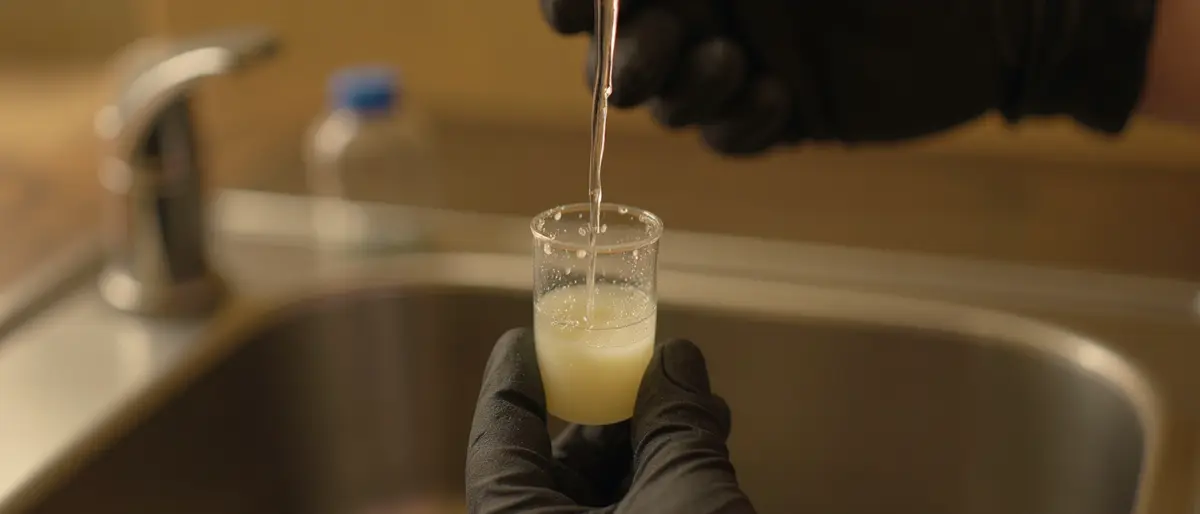
A water test depends on the draw: which tap, how long it ran, which bottle it went into and how quickly it reached the laboratory. The collection is as much of the job as the analysis.

The draw is the test

Water that sat overnight in a line reflects the pipe and fittings; water taken after a flush reflects the supply. Both are valid samples that answer different questions, so the fixture, the draw and whether treatment equipment is in the path are decided before a bottle is opened. Wells add the pump, the pressure tank and any softener or filter to that decision.

Bottles, preservatives and the clock

Samples go into the laboratory's own containers - sterile bottles for bacteriological work, preserved bottles for some metals. Many analyses have a hold time and require the sample be kept cold, so sampling is scheduled around the laboratory's intake.

Chain of custody

Samples leave the property under a chain of custody: a signed record of each sample, when and where it was collected, who has held it, and the analysis requested. That record is what lets a lender, buyer, landlord or insurer rely on the result.

The kinds of questions a water test answers

The analysis follows the question: microbiological analysis for contamination of a well or supply, metals for what plumbing adds between the main and the glass, a broader baseline for private wells (including nitrate near agriculture or septic systems), and hardness, iron and manganese for staining, odor and taste complaints.

Why laboratory analysis beats a test strip

Test strips are a rough indicator read by eye. A laboratory reports what it measured, by what method, with detection limits - including what it looked for and did not detect.

We do not sell filters, softeners or treatment systems. If treatment is warranted, the report describes what the water is doing, and what you install is your decision.

What the report may include

  • A record of each draw: fixture, first-draw or flushed, before or after treatment
  • Observations of the well head, plumbing and treatment equipment
  • Laboratory results by method, including what was not detected
  • The independent laboratory report and chain of custody
  • Stated limitations - a sample describes the water at the time it was collected

Questions we get asked

Can I just collect the sample myself and drop it off?

For some questions, yes. Common problems are the wrong bottle, a sterile bottle rinsed out, the wrong draw, or a sample that missed its hold time. If the result needs to satisfy someone else, the collection and chain of custody matter.

What should I test for?

It depends on the question. Tell us what changed and what you are concerned about, and Kris will suggest what would answer it.

My water looks and tastes fine. Is that not enough?

Not necessarily. Microbiological contamination and dissolved metals are often not noticeable by appearance or taste.

If something comes back, will you install a filter?

No. We sample and report; we do not sell treatment.

Talk it through with Kris

Scope depends entirely on the building and the question, so there is no price list here and no online booking. Call and describe what you are seeing - what you have noticed, when it started, and where - and Kris will tell you what would actually answer it.

Call (225) 717-5591

Or email kris@clarityiaq.com