
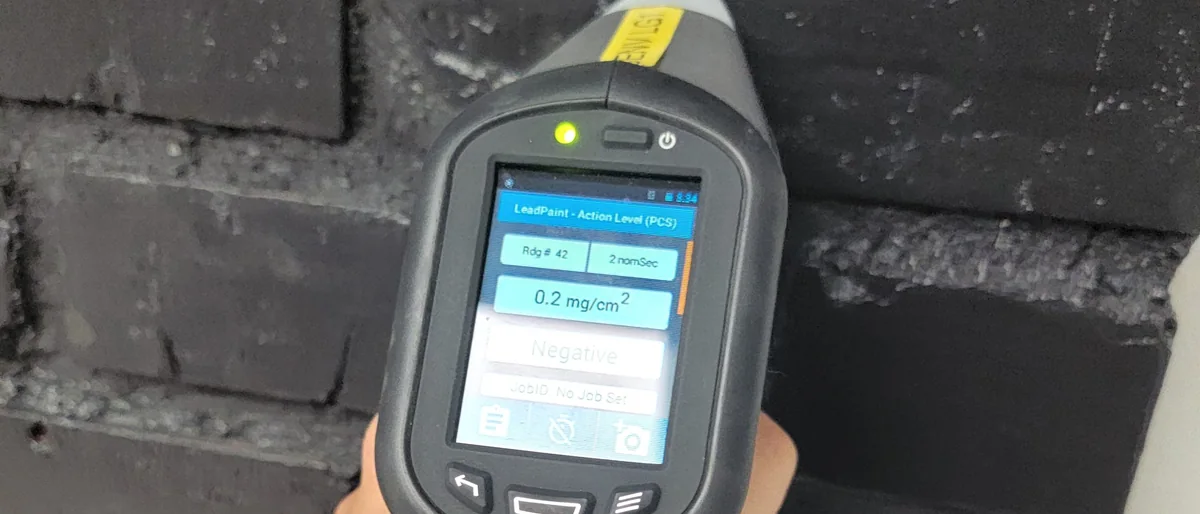
Lead

Lead hides in the parts of a house that move

Lead paint under later coats is not the main hazard - dust is, made on surfaces that rub, get walked on or get sanded. Testing tells you where lead is before a renovation or a rental turnover disturbs it.

Why older housing stock is the focus

Lead-based paint was restricted for residential use in 1978, and the restriction did not remove what was already on the walls. The older the building, the more likely lead paint is present, often under later coats. Renovation, sanding and repainting disturb those layers, and fine lead dust settles on floors and sills where it is easily picked up.

Where it hides

Friction and impact surfaces: window sashes, sills and troughs, door edges and jambs, stair treads, painted floors and railings. Exterior paint can shed into the soil along the drip line. In older plumbing, lead can be present in service lines, solder and brass fittings, which is a water question rather than a paint question.

Paint, dust and water sampling

Paint chips are taken through all layers to the substrate. Dust wipes are taken over a measured area on floors, sills and troughs, so the laboratory can report loading. Water samples may be first-draw or flushed depending on the question. Samples are logged by location and sent to an independent laboratory under chain of custody.

Why a swab screen still gets laboratory confirmation

Color-change swabs can flag a surface worth sampling, but they are a screening tool and can give false positives and false negatives - for example, when the swab never reaches an older layer under a modern topcoat. A laboratory result reports what was in the sample against a method.

What to do while you wait for results

Avoid making dust: do not dry-sand, heat-strip or scrape suspect paint. Wet-clean hard surfaces rather than sweeping, and keep children away from chipping paint and the soil along old painted siding.

We test; we do not abate. Health questions, including blood lead testing, belong to a physician.

What the report may include

  • A walk-through narrative focused on friction, impact and deteriorated surfaces
  • A sample table keyed to locations
  • Paint, dust and water results as applicable
  • The independent laboratory report and chain of custody
  • Recommendations and stated limitations

Questions we get asked

The house was painted five years ago. Does that not seal it in?

It covers it while it stays intact. Sanding, scraping or heat-stripping goes through every layer, and friction surfaces like window sashes wear through over time.

I used a hardware-store swab and it came back clear. Is that enough?

A swab is a screen, not a result. It may not reach an older layer under an intact topcoat, and it has no measured area or chain of custody.

Can you tell me whether my child has been exposed?

No. We test buildings, not people. Blood lead testing is for a physician to order and interpret.

Do you remove lead paint?

No. We test only. Where lead is identified, the report recommends that qualified professionals handle the work.

Talk it through with Kris

Scope depends entirely on the building and the question, so there is no price list here and no online booking. Call and describe what you are seeing - what you have noticed, when it started, and where - and Kris will tell you what would actually answer it.

Call (225) 717-5591

Or email kris@clarityiaq.com